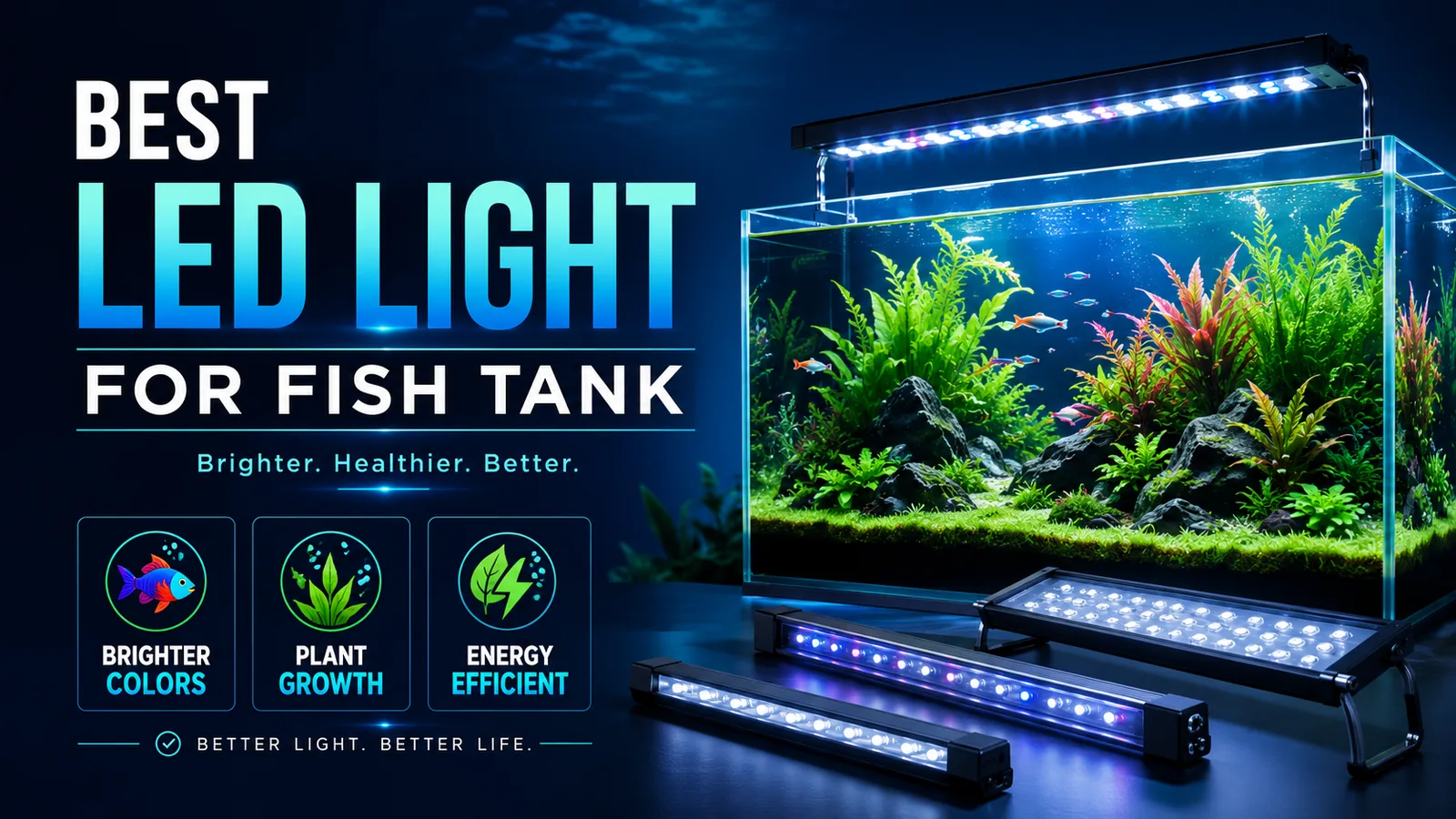
For a typical freshwater setup, choose an LED that spans most of the tank, has dimming, and can run on a timer. Planted tanks benefit from a broader spectrum and more controllable output.
The best aquarium LED is not necessarily the brightest fixture. For most freshwater tanks, even coverage, useful dimming and a repeatable daily schedule have a bigger effect on day-to-day results than an extreme maximum-output specification.
Quick picks
These lights cover different budgets and control levels. Compare tank-length fit, dimming and timer options first; then decide how much output your plants actually require instead of paying for intensity you will immediately turn down.
| Product | Best for | Why it stands out |
|---|---|---|
| NICREW C10 Plants LED | Best for planted freshwater tanks | A programmable freshwater light line designed around plant growth and daily lighting cycles. |
| NICREW ClassicLED Plus | Best simple LED | A straightforward LED bar for general freshwater viewing and low-to-moderate light setups. |
| hygger 24/7 Aquarium LED Light | Best schedule-focused alternative | A widely sold LED format with day-cycle style control for aquarists who want automated lighting changes. |
NICREW C10 Plants LED
A programmable freshwater light line designed around plant growth and daily lighting cycles.
- Plant-focused spectrum
- Adjustable schedule
- Freshwater use
Price and availability can change. Check the retailer for current details.
NICREW ClassicLED Plus
A straightforward LED bar for general freshwater viewing and low-to-moderate light setups.
- Simple controls
- Slim fixture
- Good general illumination
Price and availability can change. Check the retailer for current details.
hygger 24/7 Aquarium LED Light
A widely sold LED format with day-cycle style control for aquarists who want automated lighting changes.
- Timer functions
- Day-cycle modes
- Planted tank friendly
Price and availability can change. Check the retailer for current details.
How to Choose an LED Light for a Freshwater Fish Tank
Start with the aquarium dimensions and the plants, if any. A fish-only or low-tech planted tank needs consistent, comfortable illumination, while demanding carpet plants and red stems may justify stronger output and finer control.
Coverage
Match the fixture to the tank length and mounting position so the front and back corners are not left dim while the center is overexposed. Wide, even spread is often more useful than a narrow high-intensity beam.
Control
A reliable timer and practical dimming range let you repeat the same photoperiod every day and make gradual changes. Those controls are more useful than novelty color modes that never become part of the routine.
Plant demand
Java fern and Anubias can thrive under modest light, while carpeting plants and many red stems demand more. Buy for the plants you actually plan to grow rather than for the maximum PAR number advertised.
Heat and efficiency
LED fixtures are efficient, but sealed or splash-prone installations still need ventilation and safe clearance from water. Keep lenses and splash guards clean so mineral deposits do not quietly reduce output.
What matters in a real setup
A brighter fixture is not automatically a better fixture. If the light drives algae faster than plants can use the energy, the “upgrade” creates more work. The best light is one you can tune to the tank.
A new light changes the energy balance of the aquarium. If you upgrade from a weak fixture, start lower than the maximum setting and watch plant response and algae for two or three weeks before increasing intensity.
Setup and maintenance tips
- Begin at reduced intensity after changing to a stronger light.
- Keep the daily schedule consistent with a timer.
- Clean mineral deposits from splash guards and lenses.
- Raise or dim the fixture if algae appears first on the highest hardscape.
Use a timer from day one and keep the photoperiod consistent. When algae appears, change one variable—duration or intensity—rather than simultaneously altering fertilizer, CO2 and lighting and then guessing which change helped.
Common mistakes to avoid
Choosing solely by wattage. Wattage tells you power consumption, not how evenly usable light reaches the plants. Tank dimensions, optics and mounting height matter too.
Running 10–12 hours from day one. A long photoperiod can give algae more opportunity before plants have adapted. Start with a moderate schedule and extend it only if the tank genuinely benefits.
Ignoring tank length and mounting height. A fixture can be powerful and still provide poor coverage if it is too short or positioned too close to the surface. Check the physical fit before comparing advanced features.
FAQ
What color LED is best for freshwater aquariums?
A balanced white spectrum with red and blue components works well for viewing and common plants.
How long should aquarium LEDs stay on?
Around 6–8 hours is a useful starting point for many freshwater tanks.
Do fish need a special aquarium light?
Fish mainly need a consistent day/night cycle; plants are usually what determine the required intensity and spectrum.
Final verdict
Pick the light you can control. Even coverage, dimming and a repeatable schedule matter more than chasing the highest advertised brightness.
Confirm the current fixture length, mounting hardware, timer behavior and dimming range before purchase. A controllable light that fits the tank cleanly is usually a better long-term choice than a brighter model you cannot tune.