The best aquarium accessories are not necessarily the most visible or expensive items. For most freshwater aquariums, the priority is gear that helps you monitor conditions, perform maintenance without stress, and prevent avoidable mishaps. Decorative items can be worthwhile, but they should not crowd out swimming space, trap debris, or make cleaning difficult.
A practical accessory list depends on tank size, livestock, filtration, and how much maintenance you can reliably do. A planted community tank, a shrimp tank, and a goldfish aquarium will not need exactly the same tools. Still, a few categories are useful in nearly every setup.
Start With Essential Maintenance and Safety Gear
Maintenance tools are the accessories most likely to improve daily fishkeeping. They make water changes more controlled, help you spot problems earlier, and reduce the temptation to delay routine care.
Water-change equipment
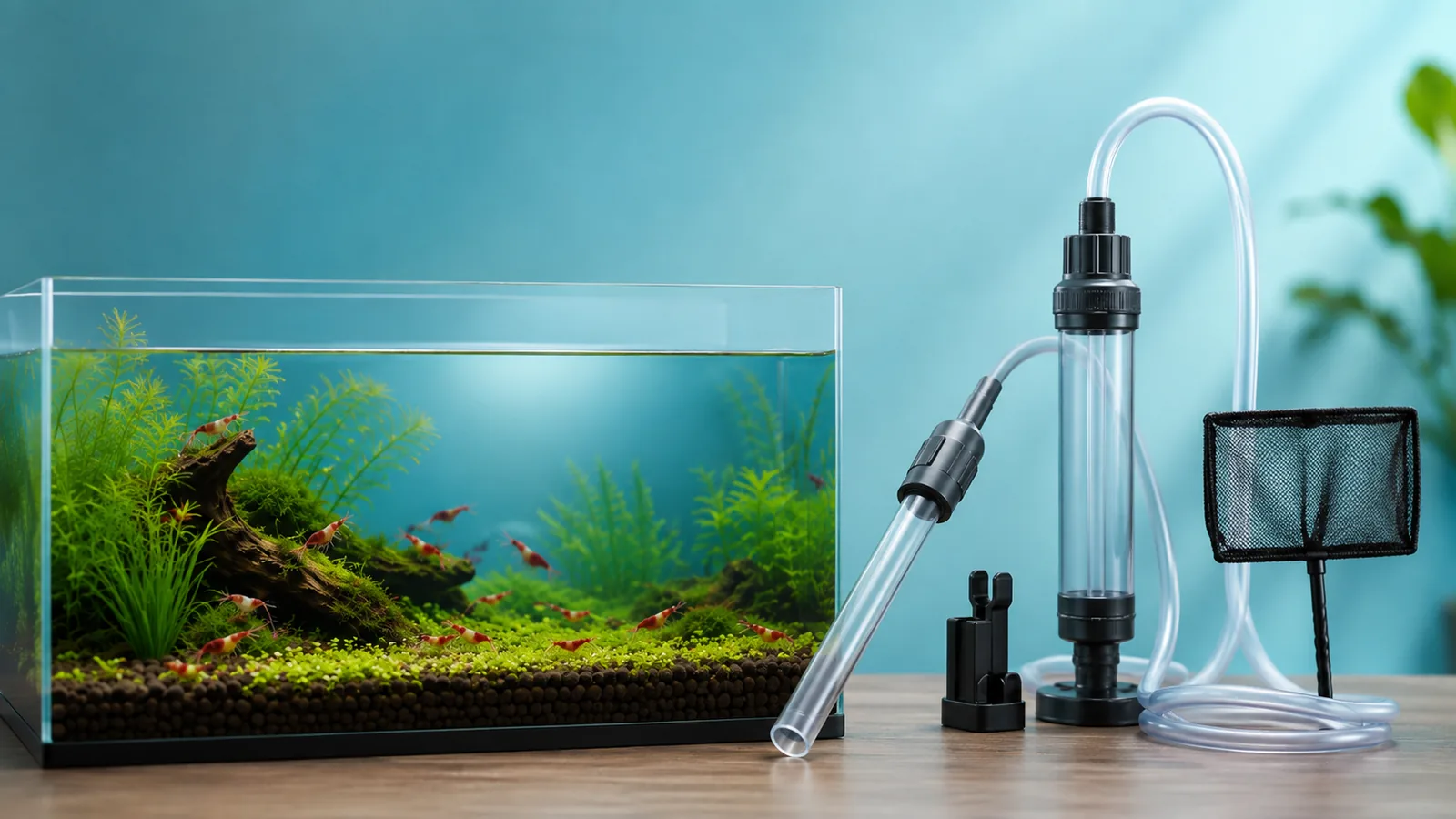
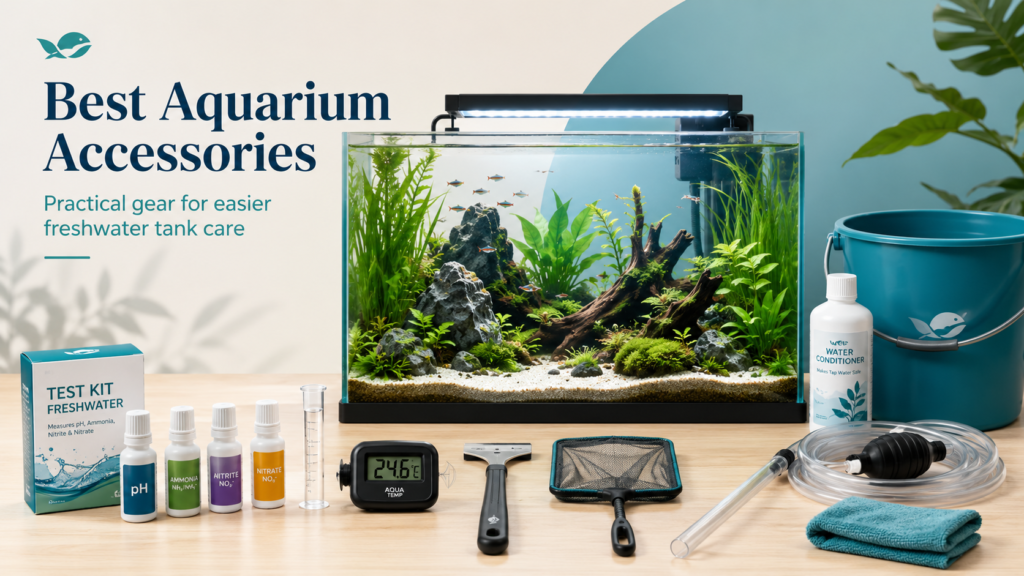
A gravel vacuum or siphon is a core tool for tanks with sand or gravel. It removes old water and loose waste while allowing you to clean the substrate selectively. Choose a size that matches the aquarium: a very large siphon can drain a nano tank too quickly, while a tiny one can make maintenance on a larger aquarium unnecessarily slow.
Keep a dedicated bucket for aquarium use only. Household buckets may carry soap, cleaners, or residues that are unsafe for fish and invertebrates. A second marked bucket can be useful for collecting old water or mixing replacement water.
Water conditioner and measuring tools
If you use tap water, a dechlorinator or water conditioner suitable for your local water supply is essential. Dose it according to the amount of new water being added, not the tank’s full volume unless the instructions specifically say otherwise.
A reliable thermometer is also a basic safety item. Temperature swings can stress fish, and an inaccurate heater setting may go unnoticed without an independent reading. For tanks using a heater, consider a separate temperature alarm or controller where temperature stability is especially important, but confirm that all components are rated for the aquarium’s electrical load.
Water testing supplies
A test kit for ammonia, nitrite, nitrate, and pH helps turn vague concerns into actionable information. Ammonia and nitrite are particularly important in new aquariums, after a filter disruption, or when fish appear distressed. Nitrate monitoring helps guide water-change frequency, although the appropriate target varies with livestock and planted-tank goals.
For shrimp, sensitive fish, or water with unusual chemistry, tests for hardness and carbonate hardness may also be useful. Test results are most valuable when logged over time; one number is less informative than a consistent pattern.
How to Choose the Best Aquarium Accessories
Rather than buying a pre-made bundle, compare accessories by the problem they solve, their fit for your tank, and the maintenance they add. A good accessory should reduce work or risk, not create another item that needs frequent adjustment.
| Selection criterion | What to check | Why it matters |
|---|---|---|
| Tank compatibility | Tank volume, rim style, lid clearance, and hose length | Poorly fitted gear can be ineffective or hard to use. |
| Livestock safety | Intake guards, smooth edges, and secure placement | Small fish and shrimp can be vulnerable to gaps and strong suction. |
| Cleaning access | Whether it can be removed, rinsed, or inspected easily | Hard-to-clean accessories often become debris traps. |
| Material suitability | Aquarium-safe materials and stable construction | Unknown coatings or metals may not be appropriate underwater. |
| Useful scale | Capacity and output matched to the aquarium | Oversized equipment can create excessive flow or clutter. |
Read the manufacturer instructions for intended aquarium size and installation limits, then compare those claims with your actual setup. Account for substrate, hardscape, and water level: a nominal tank volume is usually greater than the amount of water the aquarium actually holds.
Cleaning Tools That Save Time Without Overcleaning
Cleaning tools are useful when they help remove algae and debris without disrupting the aquarium’s biological filtration. The goal is not a sterile tank. Beneficial microorganisms live on filter media, substrate, decor, and other surfaces.
Algae scrapers and pads
Select a scraper appropriate for the tank material. Glass-safe blades and pads may scratch acrylic, while some abrasive pads can damage either surface if they pick up sand or gravel. Magnetic cleaners are convenient for light routine algae, but inspect both halves before use; trapped grit can scratch the panel.
Use a scraper on the viewing panes rather than trying to make every surface spotless. Algae on back glass, rocks, or wood is often harmless and may be grazed by some livestock. Remove only what affects viewing, water flow, or the intended appearance.
Small tools for planted and detailed tanks
Long tweezers, curved scissors, and a small net can be helpful in planted aquariums. Tweezers allow you to place root tabs or plants with less disturbance, while scissors make it easier to trim stems before they shade lower growth. Choose tools that are easy to rinse and dry, and reserve them for aquarium use.
A net should be soft enough to minimize damage to fins and sized for the fish you keep. It is a handling tool, not a routine way to chase fish around the tank. Use it only when necessary, and move slowly.
Choose Accessories That Protect Equipment and Livestock
Some accessories are less glamorous but can prevent expensive or stressful failures. Their value is highest when they address a realistic risk in your home and aquarium.
Lids, feeding openings, and cable management
A secure lid reduces evaporation and helps prevent fish from jumping. This matters for many active species, not only fish commonly described as jumpers. Leave safe openings for airline tubing and filter hardware, but avoid gaps large enough for livestock to escape.
Arrange electrical cords with drip loops below the outlet level so water cannot run directly into an outlet. Keep power strips away from splashes and do not overload them. Cable clips or simple labels can make it much easier to identify the correct plug during maintenance.
Guards and gentle flow control
Filter intake guards or prefilter sponges can protect shrimp, fry, and small fish from intake suction. They also catch coarse debris before it enters the filter, but they must be rinsed regularly in removed aquarium water to avoid reduced flow.
If a filter current pushes fish around, look for a flow adjustment, redirect the output, or use an appropriate diffuser. Avoid blocking outlets completely. Reduced circulation can compromise filtration performance and create stagnant areas.
Optional Decorations and Convenience Extras
Decorations are optional, but carefully selected pieces can provide cover, define territories, and make an aquarium more enjoyable to watch. Treat them as habitat features first and ornaments second.
Decor that earns its space
Driftwood, rocks, caves, and live plants can be useful when they create shelter without reducing necessary swimming room. Check that any cave has openings large enough for its intended occupants and no tight chambers where a fish could become stuck. Arrange heavy hardscape securely on the tank bottom or stable supports before adding loose substrate.
Live plants can provide cover and visual softness, but they also require appropriate light and may need nutrients or trimming. Artificial plants require less plant care, yet rigid plastic foliage can snag delicate fins. Soft, aquarium-intended alternatives are generally a safer choice for long-finned fish.
Extras to add only when there is a clear need
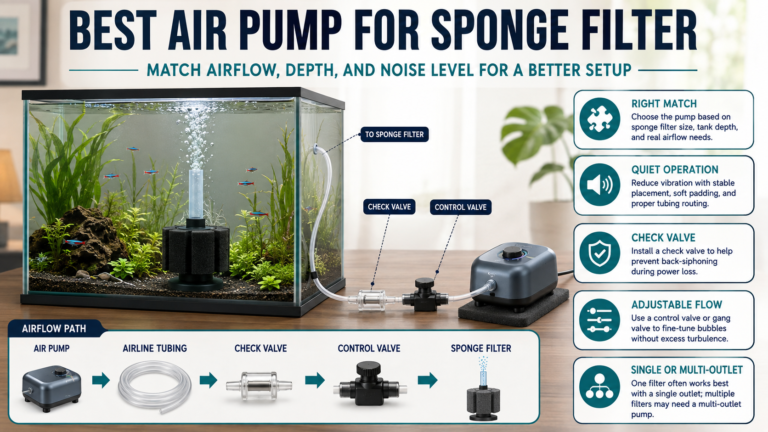
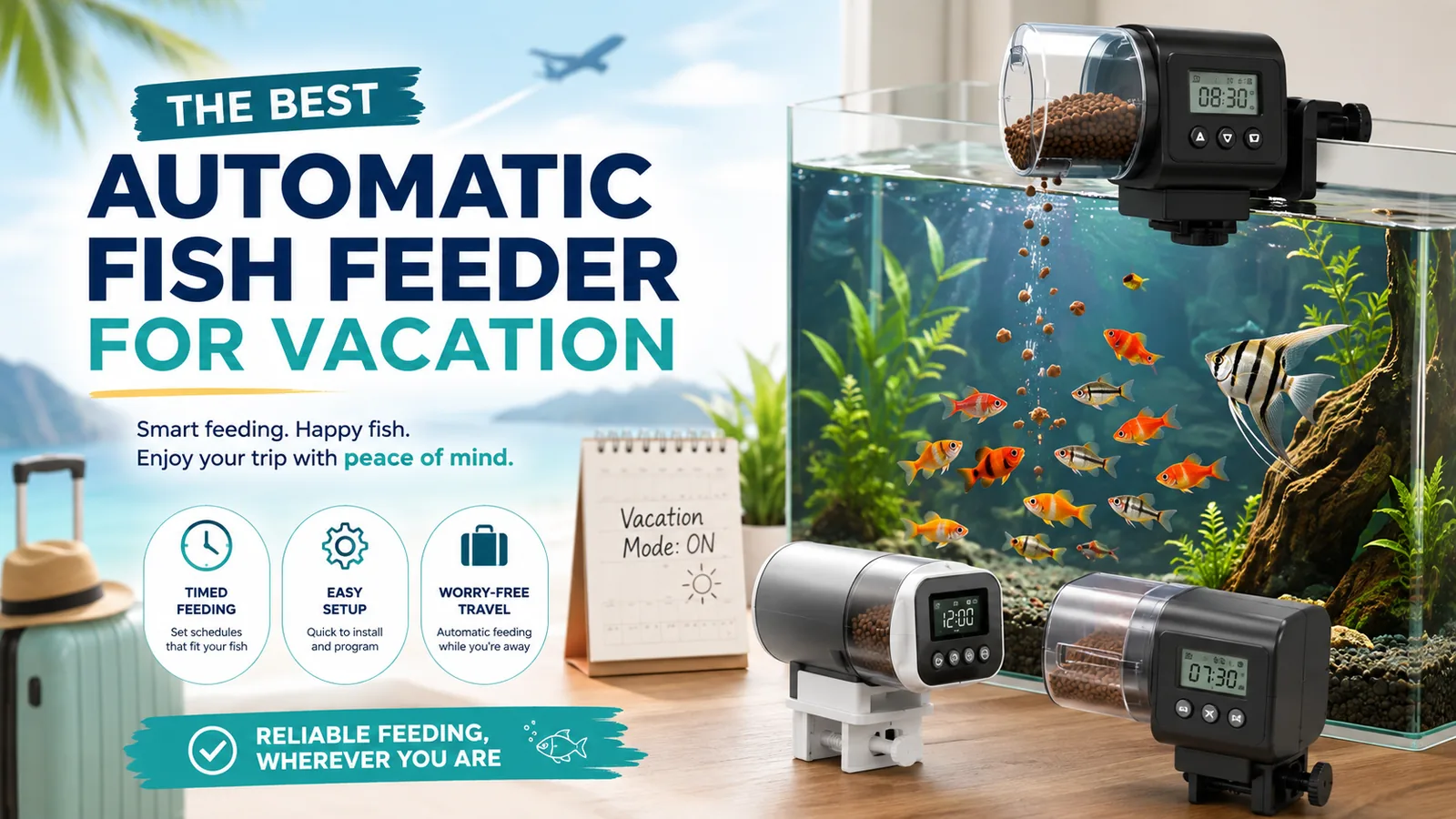
Automatic feeders can help during short absences, but they should be tested before a trip and should not be used to increase feeding beyond the aquarium’s normal routine. Excess food can quickly degrade water quality. Air pumps may be useful for certain filters, quarantine setups, medication-related instructions, or added surface movement, but they are not automatically necessary in every filtered aquarium.
Novelty ornaments, colored gravel, and bubbling decorations are personal choices. Skip anything with unknown materials, sharp edges, moving parts that could trap livestock, or a shape that makes it difficult to siphon waste around and beneath it.
Common Accessory Mistakes to Avoid
- Buying before measuring: Measure tank height, lid openings, hose route, and available outlet space before choosing equipment.
- Using cleaning products on aquarium gear: Do not wash buckets, nets, or decor with soap or household cleaners. Rinse with water and use aquarium-appropriate methods when cleaning is needed.
- Adding too much decor: Leave open water for swimming and access for a siphon, net, and algae scraper.
- Neglecting accessory maintenance: Clean prefilter sponges, inspect heaters and tubing, and replace worn parts according to their condition and manufacturer guidance.
- Using accessories to avoid water changes: Filters, additives, and cleanup animals do not replace routine observation and water changes.
A simple purchase order helps prevent clutter: first buy testing, water-change, and temperature-monitoring tools; then address livestock-specific safety needs; finally, add convenience items and decor only where they improve the setup.
Build a Useful, Manageable Setup
The best aquarium accessories support consistent care rather than turning the aquarium into a collection of gadgets. Begin with tools for safe water changes, temperature checks, and water testing. Add guards, lids, or flow adjustments when your livestock or layout calls for them. Then choose decor that provides cover while still allowing easy cleaning and plenty of usable space.
Before buying any optional item, ask three questions: Does it solve a real problem? Is it safe for the species I keep? Can I maintain it without making routine care harder? If the answer is no, it is probably clutter rather than an upgrade.
Frequently Asked Questions
What aquarium accessories should a beginner buy first?
Start with a dedicated bucket, siphon or gravel vacuum, water conditioner, thermometer, and water test kit. A net and algae scraper are also useful for routine care.
Do I need an air pump in a freshwater aquarium?
Not always. Many filtered tanks have adequate surface movement, but an air pump can be useful when additional aeration or an air-driven filter is needed.
Are aquarium decorations necessary for fish?
Fish do not need decorative ornaments, but many benefit from appropriate cover, visual barriers, and resting areas. Plants, wood, rocks, and safe caves can meet those needs.
How can I tell whether an accessory is safe for shrimp?
Check for strong filter intakes, narrow gaps, sharp edges, and unknown coatings. Use intake protection where needed and choose accessories designed for aquarium use.
Helpful products to compare
Use the buying criteria above to compare suitable options for your needs.