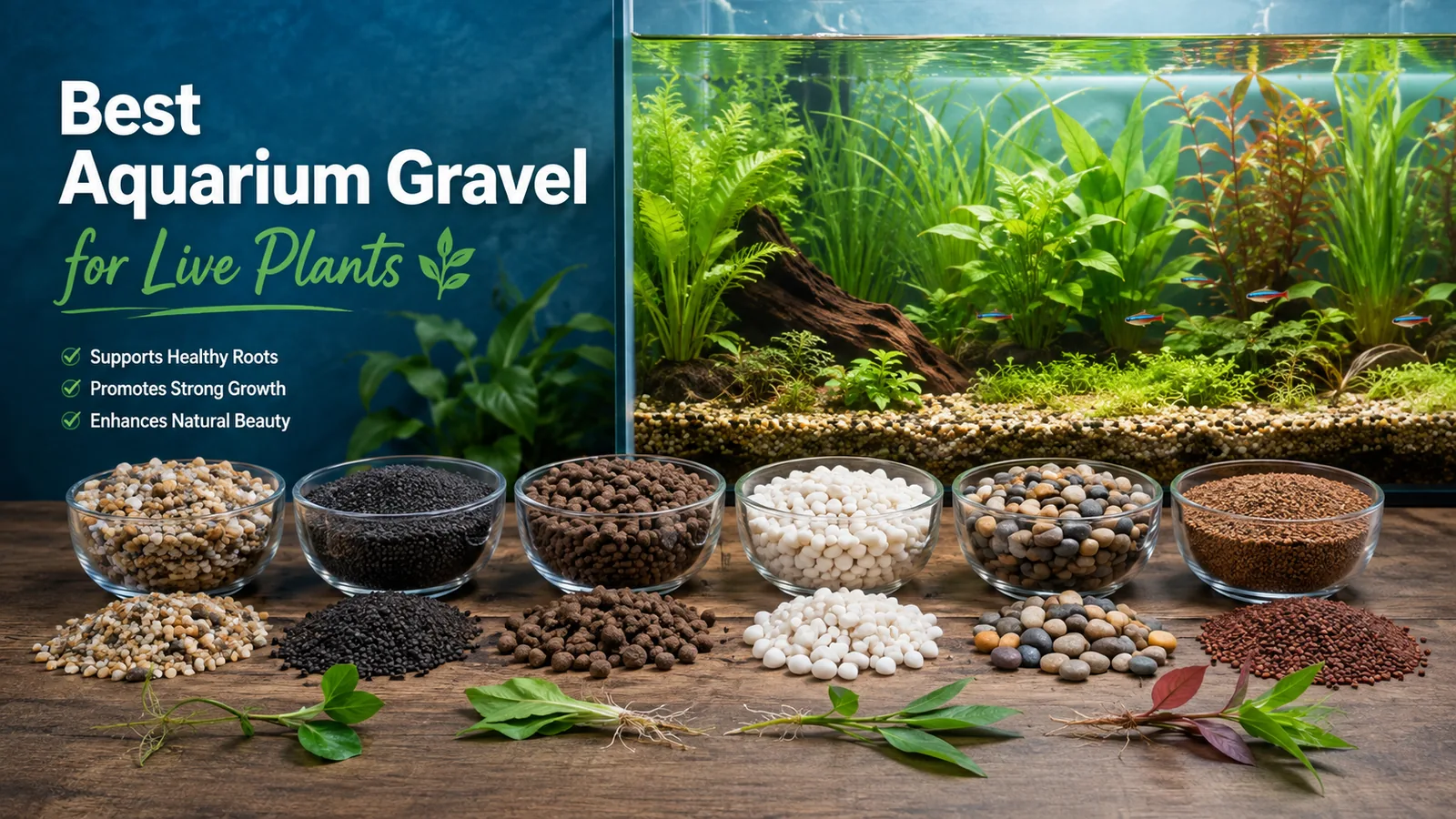
For rooted plants, choose a small-to-medium grain planted substrate or smooth gravel and add root fertilization where needed. Avoid very large decorative stones that leave roots exposed.
Live plants do not require a special branded gravel, but they do need a substrate that can hold roots and a reliable source of nutrients. Rounded, moderate-size gravel is easy to maintain and works well when paired with root tabs or other fertilization where needed.
Quick picks
The choices below include conventional gravel and plant-oriented substrates. Decide first whether you want an inert base that is easy to manage or a substrate that contributes more to the nutrient strategy and water chemistry.
| Product | Best for | Why it stands out |
|---|---|---|
| Fluval Plant and Shrimp Stratum | Best planted/shrimp soil | A lightweight planted-aquarium substrate designed for rooted plants and shrimp-oriented freshwater layouts. |
| Seachem Flourite Black Sand | Best mineral sand | A dark porous clay-based sand-style substrate for planted aquariums that can be used without frequent replacement. |
| CaribSea Eco-Complete Planted Aquarium | Best ready-to-use planted substrate | A planted-tank substrate sold as a complete base for rooted freshwater plants. |
Fluval Plant and Shrimp Stratum
A lightweight planted-aquarium substrate designed for rooted plants and shrimp-oriented freshwater layouts.
- Plant-friendly structure
- Shrimp-oriented
- Dark natural look
Price and availability can change. Check the retailer for current details.
Seachem Flourite Black Sand
A dark porous clay-based sand-style substrate for planted aquariums that can be used without frequent replacement.
- Dark color
- Plant-friendly mineral substrate
- Reusable long term
Price and availability can change. Check the retailer for current details.
CaribSea Eco-Complete Planted Aquarium
A planted-tank substrate sold as a complete base for rooted freshwater plants.
- Plant-focused
- Dark appearance
- Popular planted-tank option
Price and availability can change. Check the retailer for current details.
How to Choose Gravel for Live Aquarium Plants
The best gravel for planted tanks is stable enough to anchor roots without creating huge gaps where debris disappears. It should also fit the maintenance style you prefer, because planted substrate remains in the aquarium for years rather than weeks.
Root hold
A moderate depth of small, rounded gravel gives most rooted aquarium plants enough resistance to stay planted while new roots develop. Very large stones make planting difficult and leave big spaces around the root zone.
Particle size
Fine-to-medium gravel is easier to plant than chunky decorative rock and easier to vacuum than powdery sand. Avoid sharp material around bottom-dwelling fish and delicate plant roots.
Nutrient strategy
Inert gravel contains little nutrition on its own. Root tabs can feed heavy root feeders, while liquid fertilizer supports plants that take more nutrients from the water column.
Long-term maintenance
Debris can settle between gravel grains, so the layout should allow gentle siphoning in open areas. Dense planted zones can be cleaned more lightly once the roots are established.
What matters in a real setup
Gravel remains one of the easiest substrates for beginners because it balances root support with simple cleaning. It is especially forgiving in community tanks where you want live plants without a delicate aquascaping routine.
Think about the aquascape you want to maintain six months from now. A dramatic mixed substrate can look great on day one but become frustrating if particles separate or every water change disturbs the design. Simpler beds are often easier to keep consistent.
Setup and maintenance tips
- Slope gravel slightly toward the back to add depth without creating an excessive bed everywhere.
- Push root tabs beneath heavy root feeders rather than leaving them exposed.
- Vacuum open gravel areas but avoid disturbing established root zones.
- Use smooth grains around bottom-dwelling fish.
Slope the substrate slightly deeper toward the back if the aquascape benefits from it, place root tabs under heavy feeders, and avoid burying plant crowns. Once roots establish, clean open gravel areas without repeatedly pulling plants out for deep vacuuming.
Common mistakes to avoid
Choosing oversized decorative gravel that cannot anchor fine roots. This is where convenience can work against stability. Scale the routine to the livestock and water volume rather than pushing for maximum output.
Cleaning so aggressively that newly planted stems are uprooted. The better approach is to preserve control and visibility. Small freshwater setups usually reward gradual, deliberate maintenance.
Expecting inert gravel to feed demanding root plants by itself. This can add unnecessary stress or cleanup. Choose the gentler method first and increase intensity only when the tank clearly needs it.
FAQ
Can live plants grow in regular aquarium gravel?
Yes. Many plants do well in regular gravel when light and fertilizer are appropriate.
What gravel size is best for planted tanks?
Small-to-medium grains are generally easier for roots to penetrate and hold than large stones.
Do I still need fertilizer with planted gravel?
Often yes. Even enriched substrates eventually benefit from water-column or root fertilization depending on the plant species.
Final verdict
A smooth small-grain gravel is the easiest all-round choice. Move to specialized planted substrate when you want stronger root support or a more aquascape-focused system.
Check particle size, material and whether the substrate alters water chemistry. For most beginner planted tanks, manageable gravel plus a clear fertilizer routine is easier to control than an overly complicated substrate system.