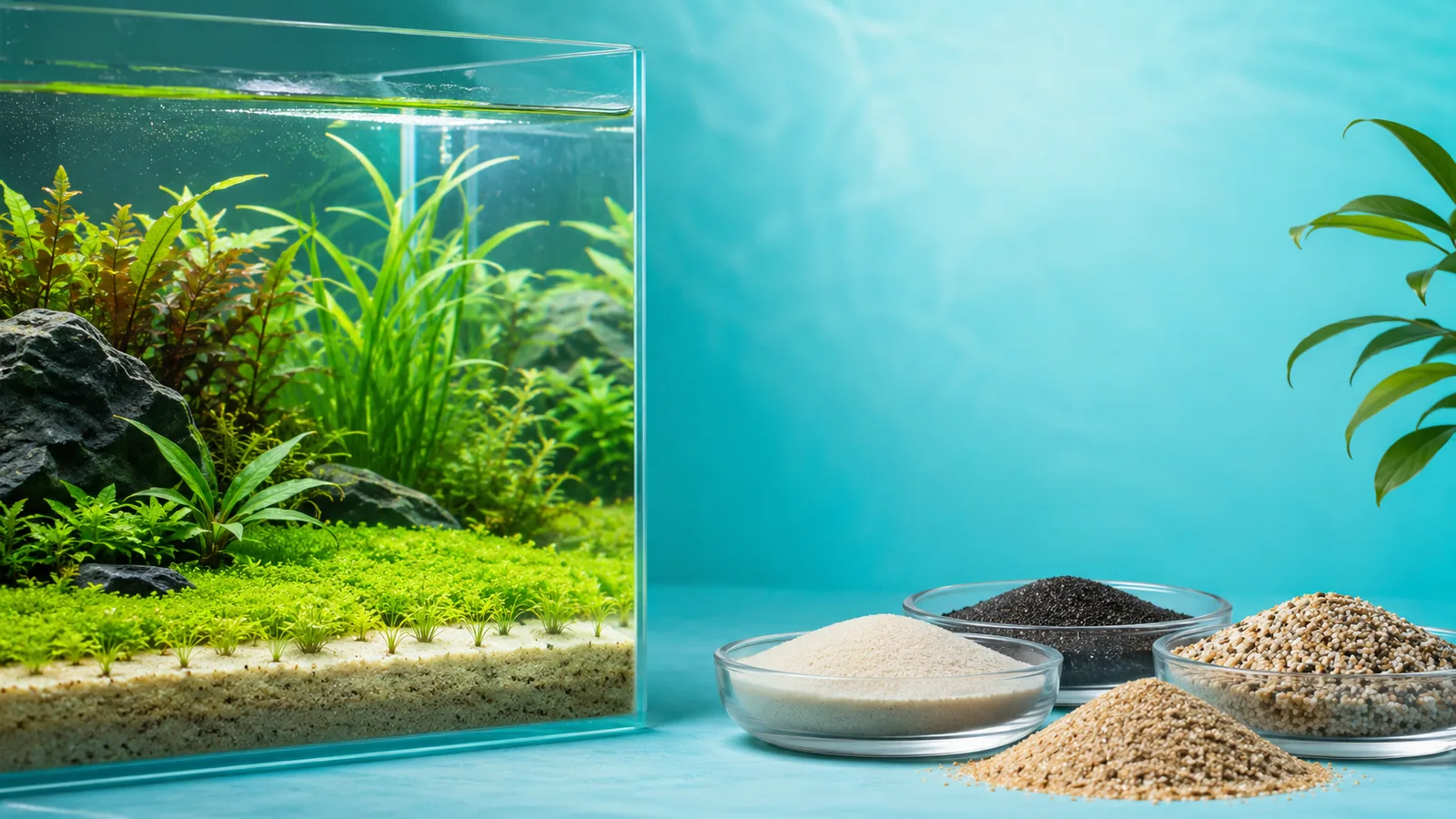
Choose a sand that is aquarium-safe, not razor-sharp, and easy to keep clean. For heavy root feeders, pair inert sand with root tabs or use a nutrient-rich planted substrate.
Aquarium plants can grow well in sand, but sand itself is usually a structural substrate rather than a complete nutrient system. The best choice has a grain size that anchors roots without packing into a hard bed and works with the fertilizer strategy you plan to use.
Quick picks
These sands differ mainly in appearance, grain character and how they fit a planted layout. Choose the look you want, then plan root tabs or water-column fertilization for species that need more nutrition than an inert substrate can provide.
| Product | Best for | Why it stands out |
|---|---|---|
| Fluval Plant and Shrimp Stratum | Best planted/shrimp soil | A lightweight planted-aquarium substrate designed for rooted plants and shrimp-oriented freshwater layouts. |
| Seachem Flourite Black Sand | Best mineral sand | A dark porous clay-based sand-style substrate for planted aquariums that can be used without frequent replacement. |
| CaribSea Eco-Complete Planted Aquarium | Best ready-to-use planted substrate | A planted-tank substrate sold as a complete base for rooted freshwater plants. |
Fluval Plant and Shrimp Stratum
A lightweight planted-aquarium substrate designed for rooted plants and shrimp-oriented freshwater layouts.
- Plant-friendly structure
- Shrimp-oriented
- Dark natural look
Price and availability can change. Check the retailer for current details.
Seachem Flourite Black Sand
A dark porous clay-based sand-style substrate for planted aquariums that can be used without frequent replacement.
- Dark color
- Plant-friendly mineral substrate
- Reusable long term
Price and availability can change. Check the retailer for current details.
CaribSea Eco-Complete Planted Aquarium
A planted-tank substrate sold as a complete base for rooted freshwater plants.
- Plant-focused
- Dark appearance
- Popular planted-tank option
Price and availability can change. Check the retailer for current details.
How to Choose Sand for a Planted Aquarium
A planted sand bed needs to do two things well: hold plants securely and remain manageable during maintenance. Extremely fine material can compact, while very coarse material begins to behave more like gravel and can let debris settle deeper.
Grain size
Medium-fine aquarium sand is easier to plant than powdery material and is less likely to create a tightly packed bed. The exact ideal depends on the plant roots and whether bottom-dwelling fish will disturb the surface.
Nutrient content
Most decorative aquarium sands are inert. Root-feeding plants such as Cryptocoryne and swords often benefit from root tabs, while epiphytes and stem plants may take more nutrition from the water column.
Color
Dark sand can make green plants and colorful fish stand out, while pale sand creates a brighter open look. Choose based on the aquascape and livestock rather than assuming one color is inherently healthier for plants.
Cleaning
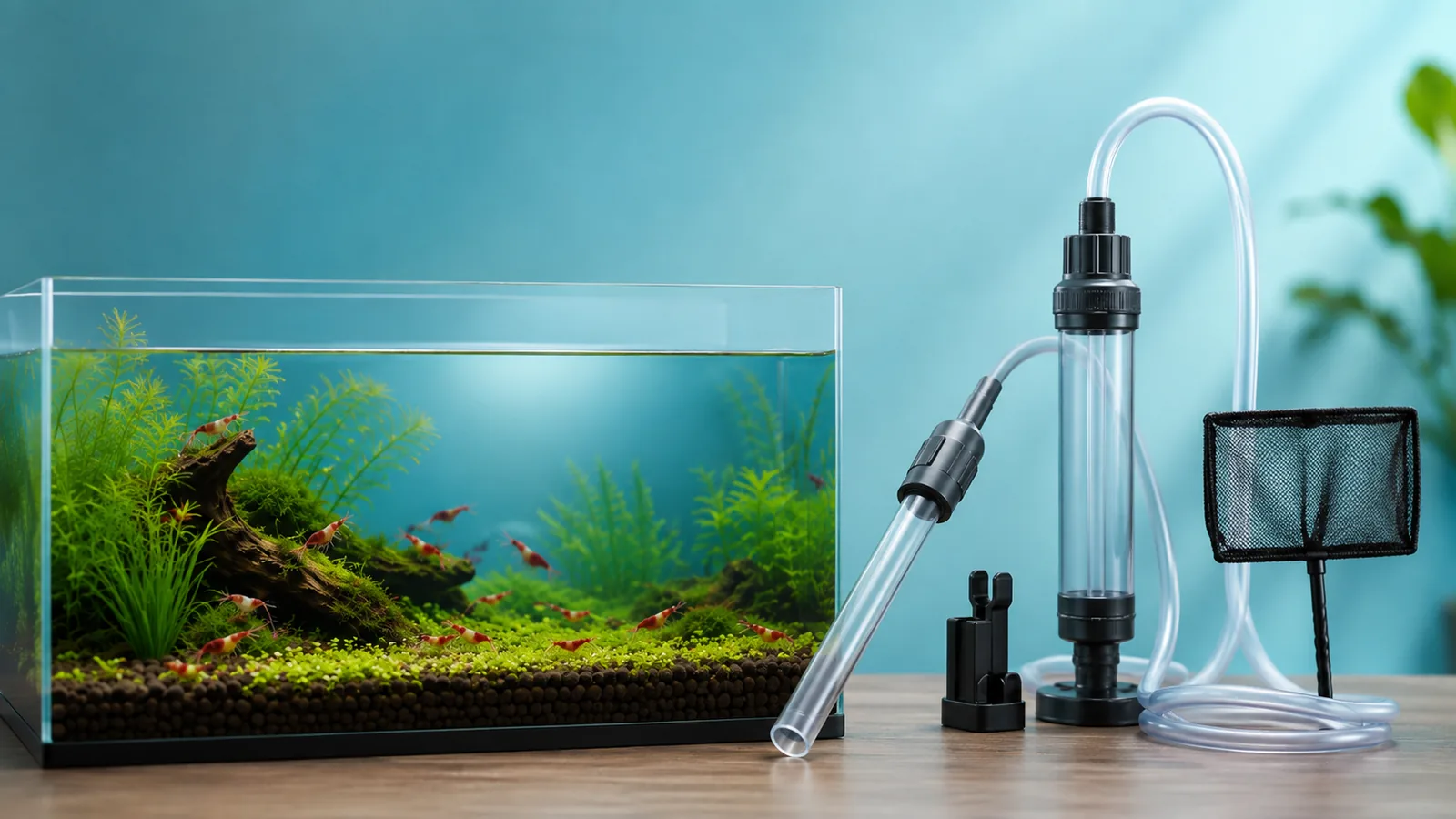
Fine sand is easiest to clean by hovering a siphon just above the surface. Pushing a gravel tube deep into the bed can remove sand and disturb roots unnecessarily.
What matters in a real setup
Sand is not “bad for plants.” The real question is whether the plant feeds heavily through its roots and whether you are willing to add nutrients where they are needed. Epiphytes such as Anubias barely care about the substrate at all.
Planting technique matters as much as the substrate brand. Insert roots deep enough to hold, then gently lift the plant a few millimeters so the crown is not buried. For new layouts, give rooted plants time to establish before repeatedly moving them.
Setup and maintenance tips
- Rinse inert sand thoroughly unless the manufacturer says it is pre-rinsed.
- Use root tabs under heavy root feeders.
- Keep the substrate shallower in open areas and deeper where roots need support.
- Hover a siphon above the surface during cleaning.
Rinse inert sand if the manufacturer recommends it, fill the tank slowly to avoid a dust storm, and add root nutrition where heavy root feeders will be planted. During maintenance, skim debris from the surface instead of trying to churn the entire bed.
Common mistakes to avoid
Assuming sand contains nutrients because it is sold for aquariums. That choice often removes more margin for error than it adds benefit. Favor a repeatable routine that is easy to monitor.
Using an extremely deep bed without understanding how it will be maintained. In a small closed system, aggressive changes can have outsized effects. Make the smallest effective change and observe the result before doing more.
Plunging a gravel vacuum deeply into fine sand. That shortcut can make a small aquarium less predictable. Use a controlled, tank-appropriate approach instead.
FAQ
Can aquarium plants grow in plain sand?
Yes, especially with water-column fertilizer and root tabs for species that feed heavily through the roots.
Is black sand better for plants?
Color is mostly aesthetic. Plant performance depends more on grain structure, nutrients, light and CO₂ availability.
How deep should sand be in a planted tank?
Enough to anchor roots—often a few inches in planted areas—without creating an unnecessarily deep bed everywhere.
Final verdict
Use sand when you like the look and are comfortable supplying nutrients intentionally. It is a flexible substrate, not a complete fertilization system by itself.
Confirm whether the current product is inert or nutrient-bearing and check the listed grain size. In planted tanks, a predictable substrate plus a deliberate fertilizer plan is more reliable than expecting the sand alone to feed every plant.