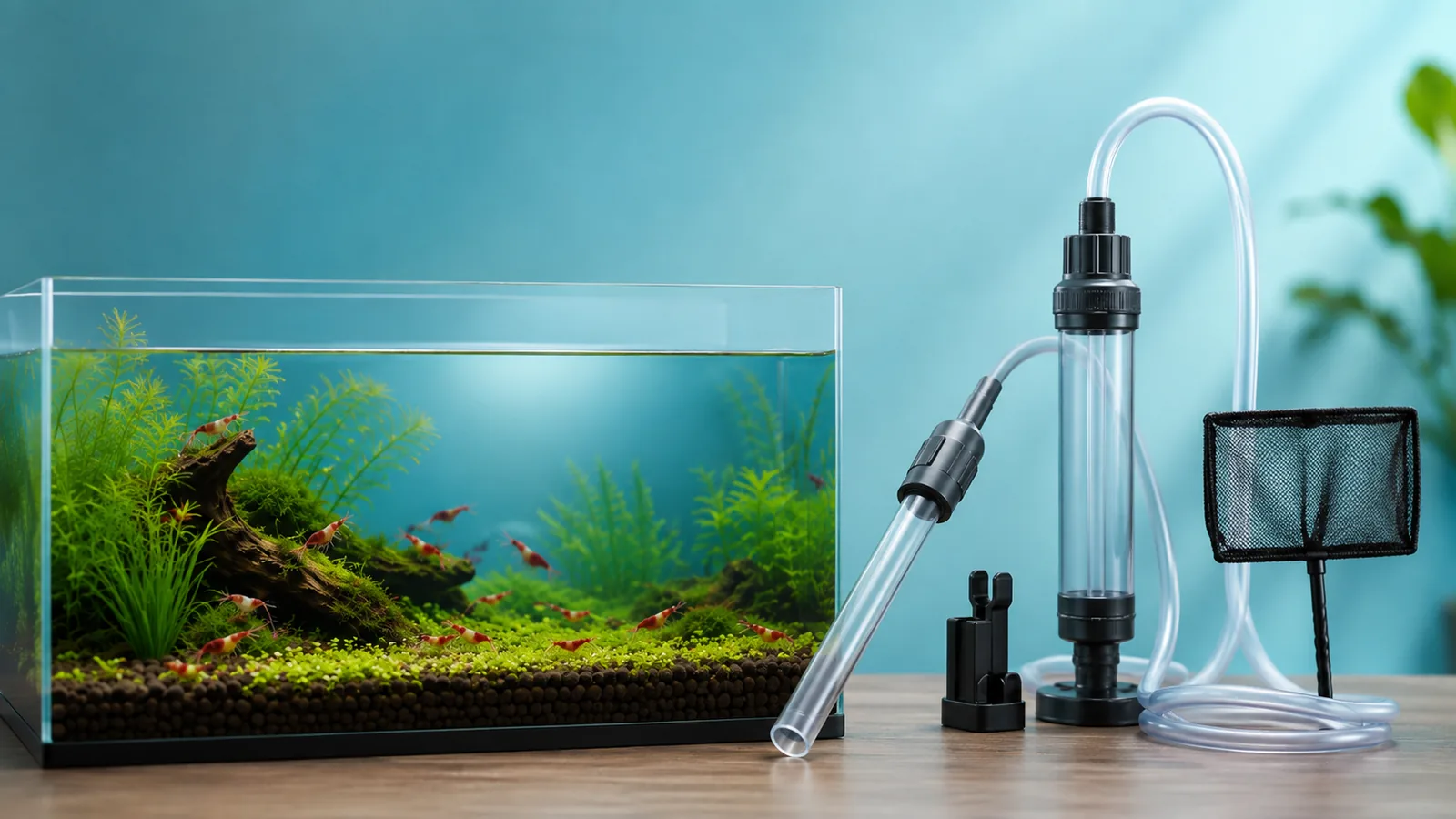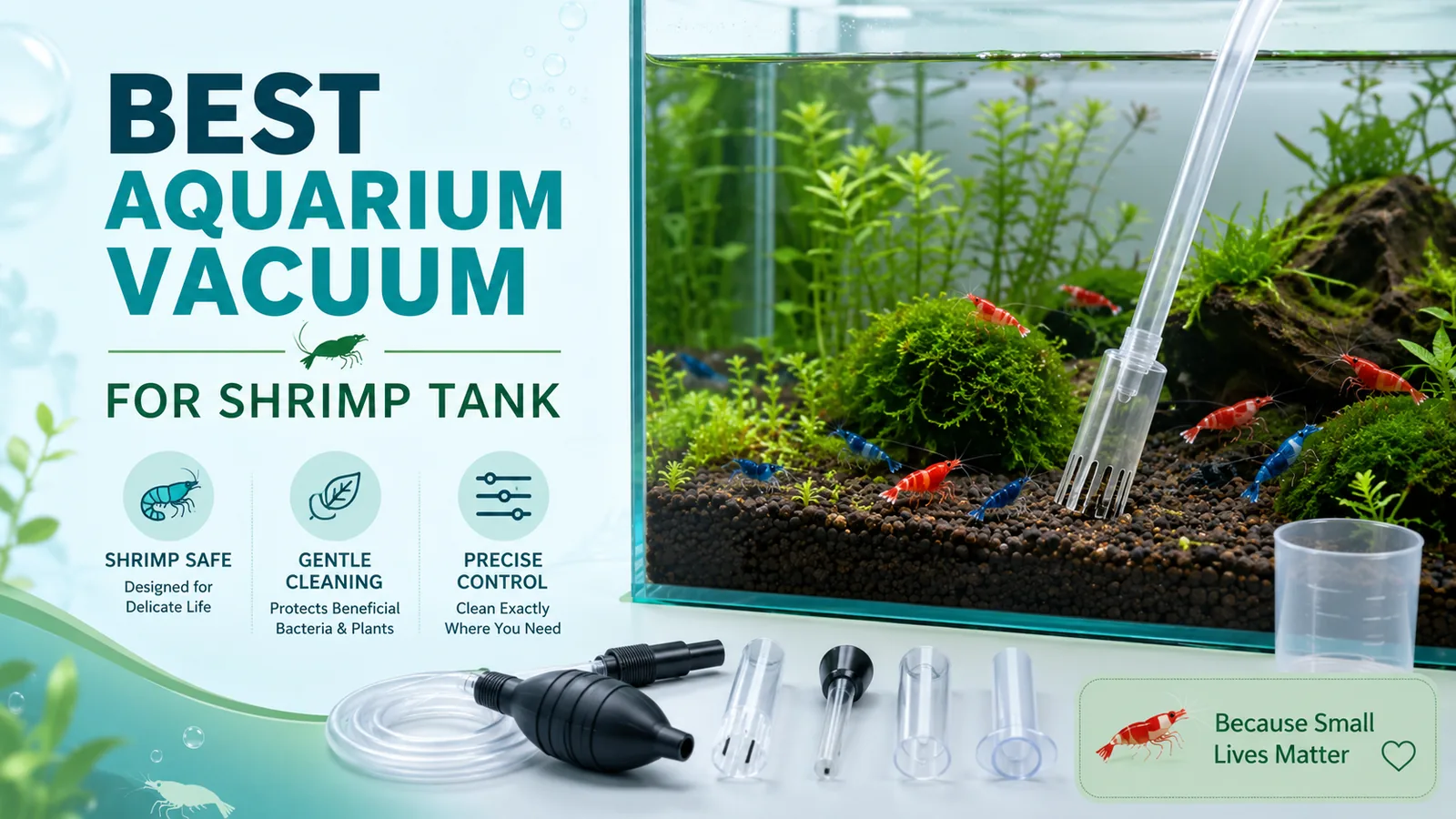
A small manual siphon is usually safer than a powerful electric vacuum in a shrimp tank. The key is controlling intake speed and keeping a close eye on juveniles.
Cleaning a shrimp aquarium requires more control than raw suction. Juveniles can disappear into a siphon quickly, and planted or aquasoil layouts are easy to disturb, so a narrow tube with controllable flow is often more useful than a powerful all-in-one cleaner.
Quick picks
The comparison below includes a basic siphon, a hose system for larger aquariums and a multi-function cleaner. For a dedicated shrimp tank, start with the option that gives you the best visibility and the easiest way to pinch or stop the flow instantly.
| Product | Best for | Why it stands out |
|---|---|---|
| Aqueon Siphon Vacuum Gravel Cleaner | Best simple siphon | A straightforward siphon designed for routine water changes while lifting debris from aquarium gravel. |
| Python No Spill Clean and Fill | Best for larger tanks | A hose-based system that can reduce bucket carrying when the aquarium is close enough to a suitable faucet. |
| hygger Aquarium Gravel Cleaner | Best multi-function option | A powered or multi-attachment style cleaner family for aquarists who want more than a basic siphon. |
Aqueon Siphon Vacuum Gravel Cleaner
A straightforward siphon designed for routine water changes while lifting debris from aquarium gravel.
- Simple priming
- Gravel cleaning
- Water changes
Price and availability can change. Check the retailer for current details.
Python No Spill Clean and Fill
A hose-based system that can reduce bucket carrying when the aquarium is close enough to a suitable faucet.
- Long hose options
- Water change convenience
- Good for larger tanks
Price and availability can change. Check the retailer for current details.
hygger Aquarium Gravel Cleaner
A powered or multi-attachment style cleaner family for aquarists who want more than a basic siphon.
- Multiple attachments
- Targeted cleaning
- Useful for routine maintenance
Price and availability can change. Check the retailer for current details.
How to Choose a Shrimp-Safe Aquarium Vacuum
The safest cleaning tool is one you can control with one hand while watching the intake. In shrimp tanks, precision around feeding areas and open substrate is usually more valuable than trying to deep-clean every square inch.
Intake diameter
A smaller intake gives you more precision around plants, moss and juvenile shrimp. Wide gravel tubes can still work, but they require slower movement and more attention in a heavily stocked colony.
Flow control
Being able to pinch the hose, use a valve or quickly lift the intake out of the water is essential. Good flow control lets you stop suction immediately when a shrimp approaches the tube.
Substrate type
Aquasoil and fine sand should not be churned like coarse gravel. Hover the siphon above delicate substrates and remove visible debris rather than repeatedly digging into the bed.
Visibility
Clear tubing and a transparent intake chamber make it much easier to spot a shrimp before it travels down the hose. Visibility is a genuine safety feature in a tank full of small invertebrates.
What matters in a real setup
Shrimp tanks are often cleaner than heavily stocked fish tanks because the bioload is lower, but they also contain more small animals, moss and fine plants. That means maintenance should be precise rather than aggressive.
Shrimp tanks often accumulate useful mulm in planted areas as well as unwanted debris in open areas. Clean selectively: siphon obvious waste from feeding zones and open substrate while leaving stable biofilm-rich surfaces alone unless they are causing a problem.
Setup and maintenance tips
- Use a white bucket so accidental shrimp are easy to spot.
- Hover above aquasoil instead of churning it.
- Vacuum only part of the tank at a time to preserve biofilm.
- Place a coarse mesh guard over the intake when cleaning around tiny juveniles.
Feed lightly the day before maintenance so less food is sitting on the substrate, and move slowly enough that shrimp can walk away from the intake. If the colony has many newborns, covering the siphon with coarse mesh can add an extra margin of safety.
Common mistakes to avoid
Deep-cleaning the entire substrate every week. That shortcut can make a small aquarium less predictable. Use a controlled, tank-appropriate approach instead.
Using a high-flow siphon in a tiny tank. This is where convenience can work against stability. Scale the routine to the livestock and water volume rather than pushing for maximum output.
Discarding water without checking the bucket for shrimp. The better approach is to preserve control and visibility. Small freshwater setups usually reward gradual, deliberate maintenance.
FAQ
Can I gravel-vac a shrimp tank?
Yes, but use gentle flow and avoid stripping the whole substrate of biofilm at once.
How do I avoid sucking up baby shrimp?
Use a small intake, add a mesh guard, and siphon into a light-colored bucket so you can inspect the water.
Should I vacuum aquasoil?
Usually only skim loose debris from the surface; deep plunging can break down soil granules and disturb roots.
Final verdict
For shrimp tanks, “best vacuum” means the tool you can control most precisely. A simple small siphon is often more useful than a complicated powered cleaner.
Check the hose length, intake size and whether the model includes a flow-control valve. For shrimp tanks, the best vacuum is the one that lets you clean deliberately without turning maintenance into a livestock rescue exercise.