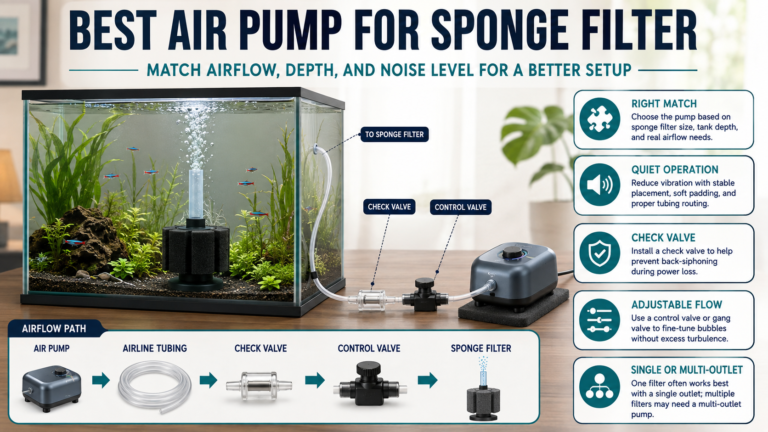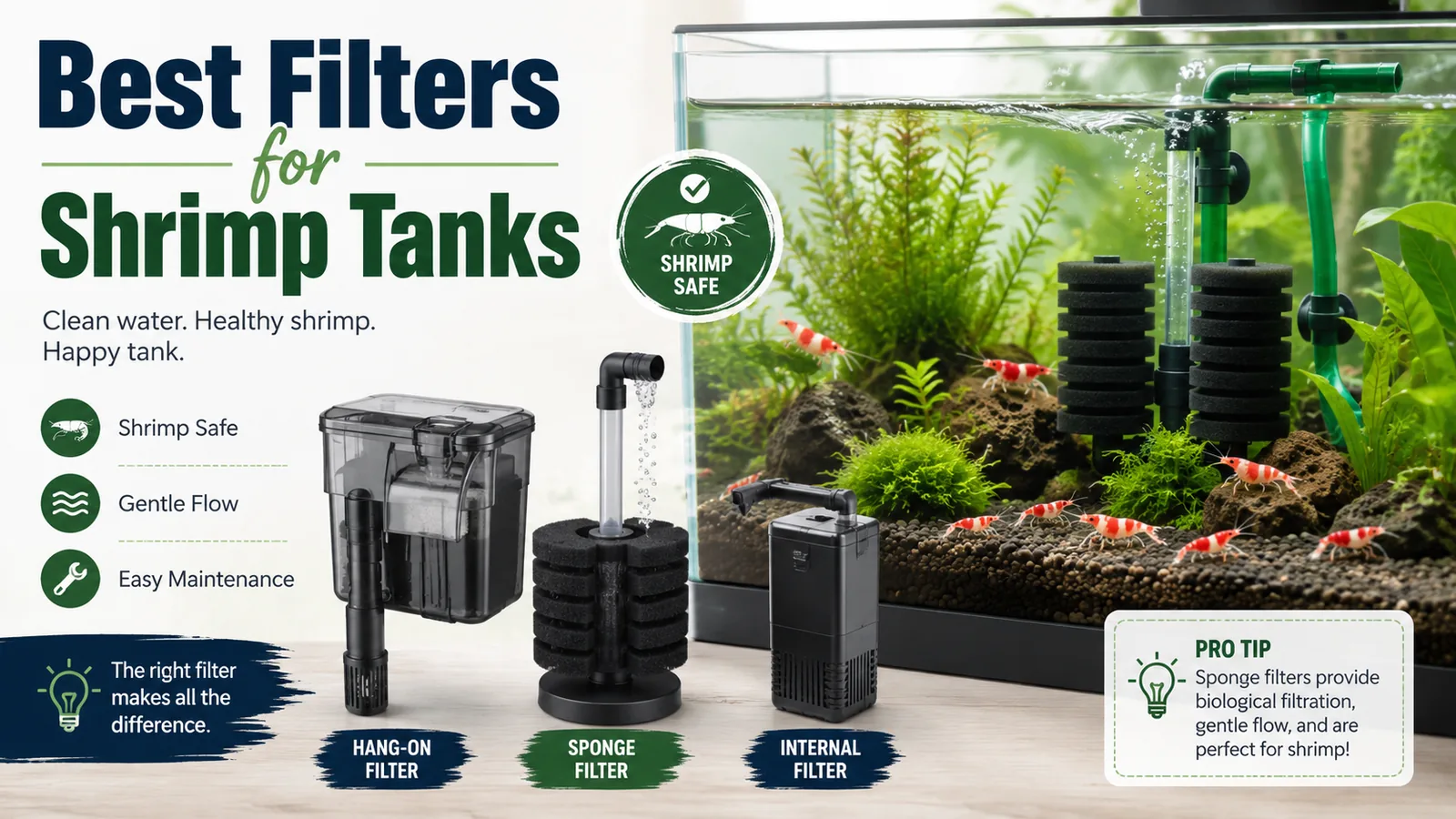
For most shrimp tanks, an air-driven sponge filter is the safest default. A gentle HOB can work well when fitted with an intake sponge and turned down enough to keep the tank calm.
Choosing a shrimp filter is less about chasing maximum turnover and more about protecting tiny animals while keeping oxygen and biological filtration steady. For Neocaridina and other dwarf shrimp, intake design, usable flow control and easy media cleaning matter more than a large pump rating.
Quick picks
The three options below represent different approaches: an adjustable HOB for media flexibility, an air-driven sponge filter for maximum shrimp safety, and a compact internal-style option when space is tight. Compare the format first, then choose a size that suits the actual aquarium.
| Product | Best for | Why it stands out |
|---|---|---|
| AquaClear 30 Power Filter | Best adjustable HOB | A proven hang-on-back format with adjustable flow and flexible media space. For shrimp, add a sponge pre-filter over the intake. |
| hygger Double Sponge Filter | Best shrimp-safe choice | A simple air-driven sponge-filter format that provides gentle circulation and a broad surface for beneficial bacteria. |
| NICREW Slim Aquarium Filter | Best compact option | A slim filter format that suits small freshwater setups where space and visual clutter matter. |
AquaClear 30 Power Filter
A proven hang-on-back format with adjustable flow and flexible media space. For shrimp, add a sponge pre-filter over the intake.
- Adjustable flow
- Flexible filter media
- Easy access for maintenance
Price and availability can change. Check the retailer for current details.
hygger Double Sponge Filter
A simple air-driven sponge-filter format that provides gentle circulation and a broad surface for beneficial bacteria.
- Gentle flow
- Shrimp-safe intake
- Excellent biological filtration
Price and availability can change. Check the retailer for current details.
NICREW Slim Aquarium Filter
A slim filter format that suits small freshwater setups where space and visual clutter matter.
- Compact profile
- Freshwater friendly
- Simple everyday maintenance
Price and availability can change. Check the retailer for current details.
How to Choose a Filter for a Shrimp Tank
A good shrimp filter should disappear into the routine of the tank. It needs to keep water moving and support bacteria without turning feeding time into a current battle or creating an intake hazard for shrimplets.
Intake safety
Shrimplets can pass through openings that look harmless to an adult shrimp keeper. If a filter uses a powered intake, plan on a fine sponge pre-filter or other shrimp-safe guard and make sure it can be removed easily for rinsing.
Flow control
Shrimp will graze in moving water, but they also need calm surfaces where powdered food and biofilm are not constantly blown away. Adjustable output, a spray bar, or the ability to aim the return at glass gives you far more control than a fixed high-flow outlet.
Biological media
Shrimp colonies benefit from mature surfaces covered in beneficial bacteria and microfauna. Sponge and porous media are valuable because they provide biological filtration and, in the case of exposed sponge, an additional grazing surface.
Tank size
Use the manufacturer rating only as a starting point. A five- or ten-gallon shrimp aquarium usually benefits from gentler, well-distributed circulation rather than a filter selected for the highest possible gallons-per-hour figure.
What matters in a real setup
In a mature shrimp aquarium, the filter is part of the grazing ecosystem. Sponge surfaces collect biofilm, microorganisms and fine food, which means a simple filter can contribute more value than its flow-rate number suggests.
Maintenance access matters as much as filtration style. A pre-filter that is difficult to remove will not be cleaned often enough, and a sponge hidden behind hardscape can become a chore. Pick a layout that lets you service the filter during a normal water change without dismantling the aquascape.
Setup and maintenance tips
- Rinse sponge media in removed tank water, not untreated tap water.
- Cover any power-filter intake before adding juvenile shrimp.
- Position the outlet so the surface moves gently without pushing shrimp around.
- Keep a spare air stone or small pump available if the main filter is air-driven.
After installation, watch where food settles and how the shrimp behave around the return. If they are constantly pushed off grazing areas, reduce or redirect flow before assuming the filter itself is unsuitable.
Common mistakes to avoid
Buying the largest filter because “more filtration is always better.” Oversized flow can create unnecessary turbulence in a small shrimp tank. Prioritize usable adjustment and biological capacity instead of buying the biggest model that fits the budget.
Running a bare intake on a breeding tank. A bare intake can trap juveniles or pull them into the filter. Fit the pre-filter before adding shrimp rather than waiting until the colony begins reproducing.
Replacing all biological media at the same time. Replacing or deep-cleaning every mature media surface at once removes a large portion of the established bacterial community. Stagger maintenance and preserve seasoned media whenever possible.
FAQ
Do shrimp tanks need a filter?
Yes in most setups. A filter stabilizes oxygenation and biological filtration, and a sponge filter adds useful grazing surface.
Are HOB filters safe for shrimp?
They can be, but use a sponge pre-filter on the intake and keep the return gentle.
How often should I clean a shrimp sponge filter?
Clean it when flow noticeably drops, usually by squeezing it gently in old aquarium water during a water change.
Final verdict
A sponge filter is the easiest recommendation for a dedicated shrimp tank. Choose a gentle power filter only when you specifically want more mechanical filtration or media flexibility.
Before ordering, confirm the current model size, included media and whether an intake sponge is supplied or needs to be purchased separately. Product families change, but the shrimp-safe principles—protected intake, gentle flow and easy maintenance—stay the same.